
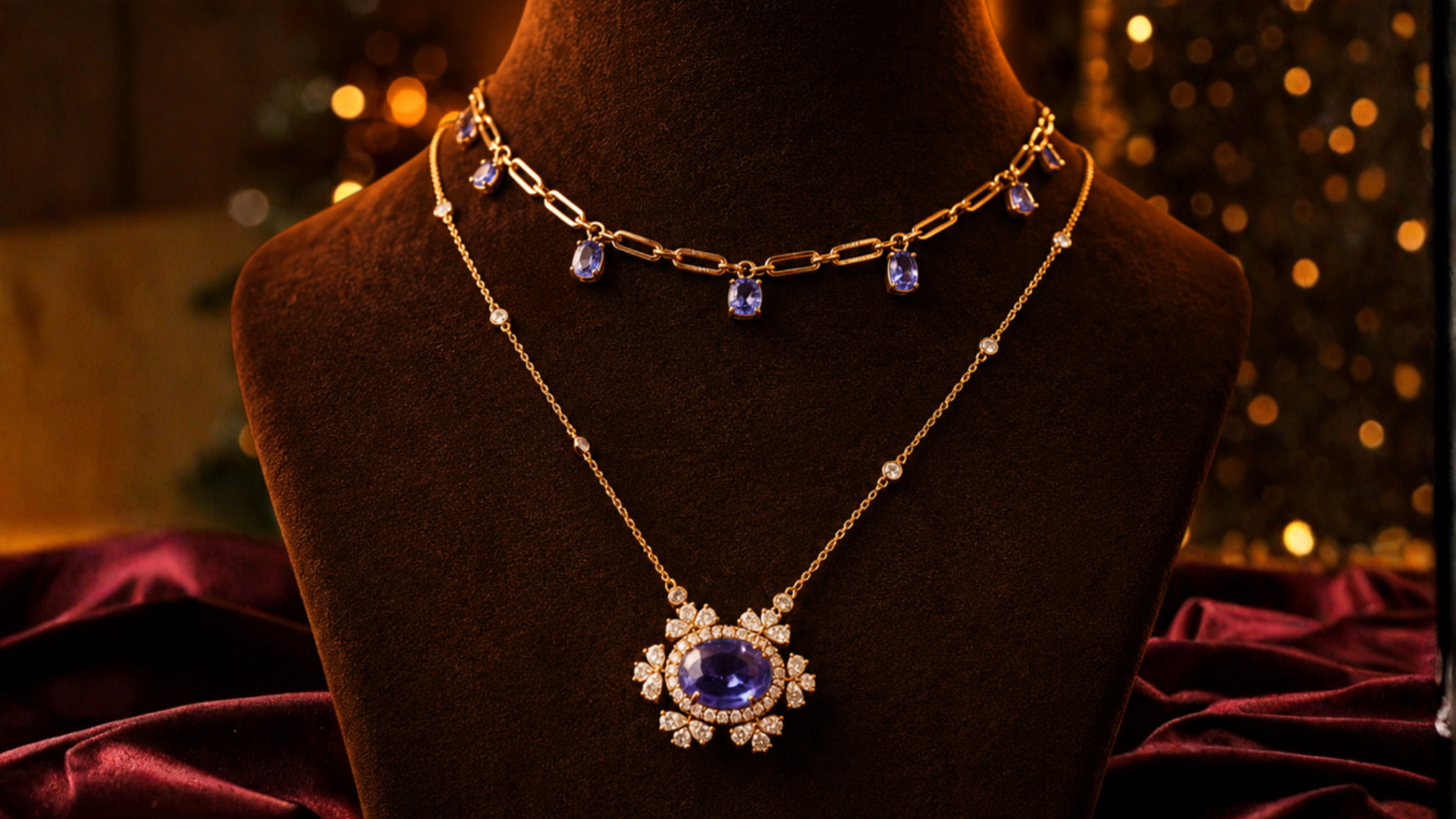
Polki Necklace Sets: Styles, Designs & How to Choose One for Your Wedding
A polki necklace set is often the centrepiece of a bridal look, but with so many styles and lengths to choose from, where do you start? Here is a guide to the most popular designs and how to pick the right one.
Polki Necklace Sets: Styles, Designs & How to Choose One for Your Wedding
For most brides, the jewellery decision does not start with earrings, bangles, or even the nethi chutti. It starts with the necklace.
Once the necklace is decided, everything else tends to fall into place around it: the earrings that balance it, the layers that build on top of it, and the overall feel of the bridal look. This is exactly why a polki necklace set is so often the centrepiece of the entire jewellery decision, and why getting it right matters so much.
But the "polki necklace set" covers a lot of ground. Chokers, long necklaces, layered stacks, floral designs, geometric designs, temple-inspired motifs. If you are starting to shop and feel a little overwhelmed by the choices, this guide is for you.
If you are still getting familiar with what polki actually is, our guide on what polki jewellery means is a good place to start before diving into styles.
Why the Necklace Comes First in a Polki Bridal Look
In our earlier guide on what a day in the life of a bridal jewellery consultant looks like, we talked about how, for most Kerala brides, the neckpiece is where everything starts. Get that right and the rest of the look falls into place naturally.
This is not just a styling preference. The necklace sits closest to the face, which means it has the biggest impact on how the entire look reads, in person and in photographs. A consultant will usually ask about the necklace before discussing anything else, because once that decision is made, choosing earrings, bangles, and other pieces becomes a much simpler conversation.
That is exactly why this guide focuses on necklaces first, starting with the piece that sits closest to the neck.
Polki Chokers: The Closest Layer
A polki choker is typically the first piece in a layered bridal look, sitting snugly at the base of the neck.
What Makes a Choker Work
Chokers work best with necklines that leave the collarbone visible, such as boat necks, off-shoulder blouses, or sweetheart necklines. The shorter length means the choker sits above the neckline rather than disappearing into it, which keeps the design visible and the proportions balanced.
A polki choker set on its own can also work as a lighter, standalone option for brides who want a polki piece without committing to a full layered stack, particularly for smaller functions or daytime events.
Choker Styles: From Elakkathali to Statement Chokers
Traditional Kerala bridal looks often begin with a short necklace close to the throat, sometimes called an elakkathali. Modern polki chokers take inspiration from this idea but vary widely in design, from a single delicate line of polki stones to a fuller, multi-row choker with a more statement presence.
A single-row polki choker tends to suit lighter, more contemporary outfits, while a multi-row choker reads as more traditional and works well with richly worked sarees or heavier silk drapes.
Polki Long Necklaces: The Statement Layer
If the choker is the closest layer, the long necklace is usually the statement piece, the one that draws the eye and anchors the whole look.
Rani Haar and Other Long Polki Styles
A rani haar is a long necklace, typically sitting at chest level, and it is one of the most popular long-format polki designs. Its length and scale make it a natural focal point, especially when paired with a shorter choker underneath.
Other long polki styles include single-strand pieces with a larger central pendant, and graduated designs where the polki stones increase in size toward the centre of the necklace.
When a Long Necklace Works Best on Its Own
Not every bride wants a full layered stack for every event. A long polki necklace, particularly a rani haar with a strong central design, can work beautifully as a standalone piece for a reception look, where the bride may want something lighter to move comfortably in while still making a clear statement.
Polki Necklace Set Designs: What's Trending Right Now
Polki necklace set designs have evolved well beyond the heavier, traditional styles many people picture. Here are a few directions that are particularly popular at the moment.
Floral and Nature-Inspired Polki Designs
Floral motifs remain one of the most enduring polki design themes, with stones arranged into petal and leaf shapes that catch light beautifully from multiple angles. These designs tend to feel romantic and timeless, which is part of why they remain popular across generations of brides.
Geometric and Contemporary Polki Cuts
For brides who want something that feels a little more modern, geometric polki necklace sets arrange stones in clean lines, angular clusters, or repeating patterns. These designs often pair particularly well with contemporary blouse cuts and fusion outfits, without losing the warmth that makes polki distinctive.
Traditional Temple-Inspired Polki Motifs
Temple jewellery motifs, such as deity figures, peacocks, and lotus designs, are sometimes combined with polki work to create pieces that bring together two strong jewellery traditions in one design. These tend to be statement pieces, well suited to brides who want their necklace to carry cultural significance alongside its visual impact.
Building a Full Polki Necklace Stack for Your Wedding
A full polki necklace stack is built in layers, with each piece playing a specific role.
The Three-Layer Formula
A simple way to think about a layered polki look is in three parts:
The closest layer: a polki choker, sitting at the base of the neck.
The mid-length layer: a medium-length necklace that bridges the gap between the choker and the longest piece.
The statement layer: a long necklace or rani haar, sitting lower and acting as the visual anchor.
This is the same logic behind the traditional Kerala bridal stack we discussed in our bridal jewellery consultation guide, where pieces like the Manga Mala, Palakka Mala, and Mullamottu Mala each sit at a different length and carry a different visual weight. The same principle applies whether you are working entirely in polki or mixing polki with other styles.
Matching Your Necklace Set to Earrings and a Nethi Chutti
Once the necklace stack is decided, the rest of the set tends to follow naturally. A heavier, multi-layer necklace stack usually calls for simpler earrings, such as small studs or compact jhumkas, so the overall look does not feel overcrowded. A single statement necklace, on the other hand, leaves more room for larger polki jhumkas or drop earrings.
A nethi chutti should echo the design language of the necklace, whether that is a floral motif, a geometric pattern, or a temple-inspired design, so the full set reads as one cohesive look rather than separate pieces.
Kundan Polki vs Pure Polki Necklace Sets
You will often see polki necklace sets described as "kundan polki." This simply means the polki diamonds are set using the kundan technique, a traditional method of setting stones into gold foil rather than metal claws.
In practice, most fine polki necklace sets use this kind of foil setting, since it is part of what gives polki its characteristic warm glow. The key thing to look for is not whether a piece is described as "kundan" or "polki," but whether the stones themselves are genuine uncut diamonds and the gold used in the setting is BIS 916 hallmarked. Both terms are simply describing different parts of the same piece: the stone, and the way it is held in place.
How to Choose the Right Polki Necklace Set for Your Wedding
With so many styles available, here is a simple framework to narrow things down.
Match It to Your Outfit Colour and Neckline
A choker-led look suits necklines that leave the collarbone visible. A long necklace or rani haar works well with simpler necklines, where the necklace itself becomes the main detail. In terms of colour, polki's warm, champagne-toned glow pairs particularly well with ivory, off-white, deep reds, and jewel tones, similar to how yellow gold pairs with rich ethnic colours.
Match It to Your Wedding Timeline
If you are planning multiple events over several days, consider how many of those events call for a full layered stack versus a lighter, single-piece look. Polki's lighter weight compared to solid gold makes it easier to wear across consecutive days, but a full three-layer stack may feel like too much for a daytime function. Plan your necklace sets around your event calendar, not just your outfit.
Match It to Your Budget: Gold Weight vs Stone Coverage
Within polki necklace sets, price differences often come down to two factors: the weight of gold used in the setting, and the size and coverage of the polki stones themselves. A piece with smaller, more delicate stones and a lighter gold base will sit at a different price point than a heavily stoned, substantial design, even if both are equally genuine. Always confirm BIS 916 hallmarking on the gold component, regardless of which design you choose.
Consider Custom Orders and Advance Booking
If you have a specific design in mind, such as a particular motif or a very specific necklace length, a custom order may be the right route. Our Advance Booking option allows you to lock in your design and the current gold rate ahead of time, which is especially useful if you are planning your jewellery several months before the wedding.
Frequently Asked Questions About Polki Necklace Sets
What is a polki necklace set?
A polki necklace set is a coordinated group of necklaces, often including a choker and a longer piece, made using uncut polki diamonds set in gold. A full set may also include matching earrings and a nethi chutti.
What is the difference between a choker and a rani haar in a polki set?
A choker sits close to the base of the neck and is usually the shortest piece in a layered set. A rani haar is a longer necklace that sits at chest level and typically acts as the statement piece, often worn together with a choker for a layered look.
How many pieces come in a typical polki bridal necklace set?
This varies depending on the design and the bride's preference, but a full bridal stack often includes a choker, a mid-length necklace, and a longer rani haar or statement piece, sometimes alongside matching earrings and a nethi chutti.
Can a polki necklace set be worn after the wedding?
Yes. Lighter pieces from a polki necklace set, such as a single choker or a smaller necklace, can be worn for other occasions after the wedding. Many brides also choose designs with this in mind from the start, selecting pieces that work both as part of a full bridal stack and on their own.
How do I choose the right polki necklace set for my wedding outfit?
Start with your neckline and outfit colour, then consider how many wedding events you are planning for and whether you want a full layered stack or a single statement piece. From there, gold weight and stone coverage will largely determine where each design sits within your budget.
Final Thoughts
There is no single "right" polki necklace set. The right choice depends on your outfit, your wedding timeline, and how you want to feel wearing it, whether that is the full weight of a layered traditional stack or the simplicity of one statement piece.
If you would like to explore polki necklace sets in person, our TAHOR collection is available at our showrooms in Edapally, Kochi, and Pathanamthitta. You are also welcome to reach out to us on WhatsApp to schedule a consultation, or explore our Advance Booking option if you are planning ahead for an upcoming wedding.