
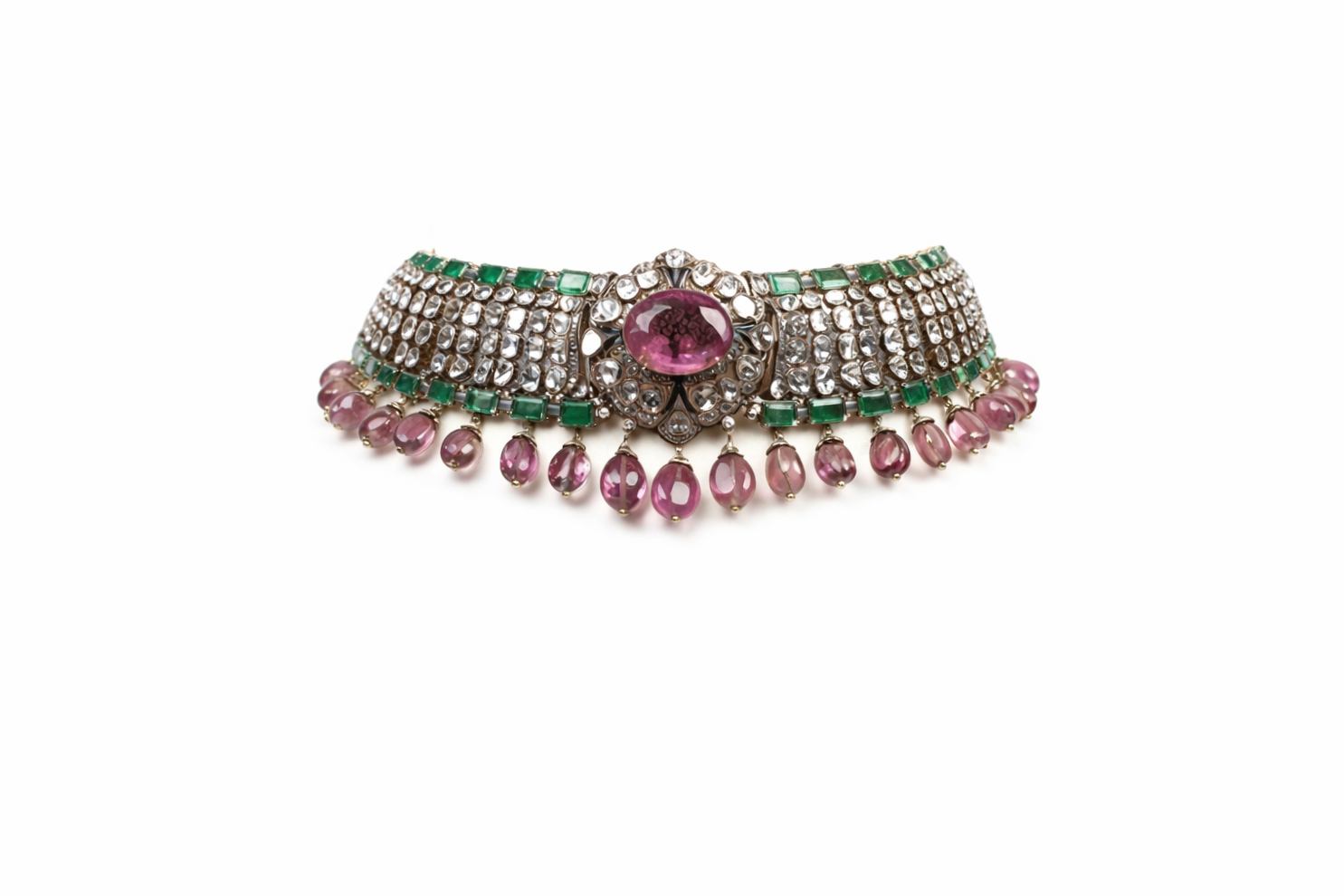
What Is Polki Jewellery? A Complete Guide to Uncut Diamonds
There is a moment in almost every showroom when someone points at a necklace and asks if it is a real diamond. This guide explains exactly what polki jewellery is, where it comes from and what to look for.
What Is Polki Jewellery? A Complete Guide to Uncut Diamonds
There is a particular moment that happens in almost every jewellery showroom. A customer points at a necklace, admires the warm, slightly uneven sparkle of the stones, and asks a simple question: "Is this a diamond?"
The honest answer is yes, and also, it is not quite what most people picture when they hear the word diamond.
That necklace is polki jewellery. And once you understand what polki jewellery actually is, the rest of the jewellery world starts to make a little more sense, especially if you are shopping for a wedding, a milestone occasion, or simply something that feels timeless rather than trend-driven.
This guide breaks down what polki means, where it comes from, what makes a stone "polki," and how to think about it when you are ready to buy.
What Does "Polki" Actually Mean?
Polki refers to natural, uncut diamonds used in their raw form, with only minimal shaping and polishing done to bring out their shine. Unlike the diamonds most people are familiar with, which are cut into precise facets to maximise brilliance, polki stones retain much of their original, irregular shape.
This is the heart of polki jewellery meaning: it is jewellery built around diamonds that have not been forced into a standard cut. The stone is allowed to remain closer to its natural form, and the jewellery is designed around that individuality rather than against it.
This is also why no two polki pieces ever look quite the same. The slight variations in shape, the soft, glassy lustre instead of sharp fire, and the way light moves across the surface rather than bouncing off in tight flashes, these are not flaws. They are the entire point.
If you have ever wondered what is polki jewellery while looking at a bridal set with stones that seem to glow rather than sparkle, that glow is the signature of polki.
The History of Polki: From Royal Courts to Modern Brides
Polki is not a modern trend dressed up as tradition. It is one of the oldest forms of diamond jewellery in the world, and its story is closely tied to two things: the jadau setting technique, and the city of Jaipur.
The Jadau Technique Explained
Long before modern claw and prong settings existed, jewellers needed a way to hold uncut, irregularly shaped diamonds securely in place without damaging them. The answer was jadau, a technique where stones are set into pure gold foil rather than held by metal claws.
In jadau work, a thin sheet of 24-karat gold foil is placed behind the stone. The softness of pure gold allows it to be moulded around the irregular edges of a polki diamond, holding it firmly while also reflecting light back through the stone from behind. This is part of why polki stones appear to glow from within.
Polki and jadau are often mentioned together, and for good reason. Polki is the stone. Jadau is the technique that traditionally holds it in place. Together, they form one of the most labour-intensive and skilled categories of jewellery making that still exists today.
Why Jaipur Became Synonymous With Polki
Jaipur's connection to polki jewellery goes back centuries, to a time when royal courts across India commissioned elaborate jewellery using uncut diamonds sourced from historic mines. Jaipur's karigars, or master craftsmen, became famous for their ability to set these stones using jadau work, often combining polki with enamel work, pearls, and coloured gemstones.
That reputation has carried forward. Even today, a significant amount of fine polki craftsmanship traces its techniques back to traditions perfected in Jaipur's jewellery workshops, even when the final piece is made and sold elsewhere in India.
What Makes a Diamond "Polki"?
Not every uncut-looking stone is technically polki, and understanding the distinction helps you shop with more confidence.
Natural Uncut Diamonds vs Polished Diamonds
A polished diamond goes through a precise cutting process designed to create symmetrical facets that maximise brilliance and fire, the sharp, flashing sparkle most people associate with diamonds. A polki diamond, by contrast, is left largely in its natural, flat-ish form. It is cleaned and given a light polish, but its original shape is preserved.
The result is a softer, more reflective glow rather than a sharp sparkle. This is one of the simplest ways to understand what is a polki diamond: it is a diamond that has chosen to keep its character rather than be reshaped to match a standard.
The Role of Foil-Backing and Gold Settings
Because polki stones are not cut to reflect light internally the way polished diamonds are, the setting plays a much bigger role in how they look. A thin layer of coloured foil, usually silver or gold-toned, is placed behind the stone before it is set. This foil reflects light back through the diamond, enhancing its brightness and, in many cases, adding a subtle colour tone.
This is also where polki and kundan jewellery often get mentioned in the same breath, since kundan refers to a similar gold-foil setting technique traditionally used with both diamonds and coloured gemstones. The two terms are related but not identical.
Common Polki Stone Qualities to Look For
When you are looking at polki stones, a few qualities are worth paying attention to:
Shape: Genuine polki stones have naturally irregular, often flat shapes. Perfectly uniform, identical stones across a piece can be a sign of synthetic or imitation material.
Lustre: Look for a soft, slightly milky glow rather than sharp, rainbow-coloured flashes.
Setting depth: Real polki is typically set with visible foil backing and a slightly raised, domed appearance.
Colour: Natural polki diamonds often have a faint warm or champagne tint, which is part of their charm rather than a defect.
None of these qualities make a stone "less than." They are simply what genuine polki looks like, and once you have seen real polki in person, it becomes much easier to recognise.
Polki Gold Jewellery: Why the Metal Matters as Much as the Stone
With polki gold jewellery, the gold is not just a frame for the stone. It is an active part of how the piece looks, performs, and lasts.
Because jadau work relies on pure gold foil to hold and reflect light through the stones, the quality of the gold used directly affects both the appearance and the durability of the piece. This is why purity certification matters just as much for polki jewellery as it does for any other gold ornament.
What BIS 916 Hallmarking Means for Polki Jewellery
At Arabian Gold and Diamonds, every piece of gold, including the gold used in our polki and jadau work, carries BIS 916 hallmarking. This certifies that the gold is 91.6% pure, the standard for 22-karat gold, with a HUID number that makes each piece individually traceable. When you are investing in a polki piece, this certification is what protects both the beauty of the setting and its long-term value.
Why Polki Has Become a Modern Bridal Favourite
For a long time, polki was seen primarily as heritage jewellery, the kind of pieces passed down through generations or worn only for the most formal occasions. That has changed, and quite quickly.
More brides today are choosing polki not despite its traditional roots, but because of them. A polki necklace set brings a sense of history and craftsmanship that newer styles cannot replicate, while still feeling fresh against modern bridal outfits.
Why Polki Works Across Multi-Day Weddings
There is also a practical side to this shift. Polki jewellery tends to be lighter than solid gold pieces of a similar visual scale, which matters enormously for brides planning multiple events over several days. It also photographs beautifully, the soft glow of polki stones reads warmly under both daylight and indoor lighting, which is part of why it has become such a popular choice for wedding photography.
Our TAHOR collection was designed with exactly this in mind: jadau and polki work that honours traditional craftsmanship while fitting comfortably into a modern bride's wardrobe across multiple wedding functions.
If you are exploring bridal jewellery more broadly and want to understand how a professional consultation works, our guide, A Day in the Life of a Professional Jewellery Consultant for Brides, walks through exactly what that process looks like, including how polki and jadau pieces are often introduced during a bridal consultation.
How to Tell if Your Polki Jewellery Is Genuine
Given how popular polki has become, imitation versions made with glass, synthetic stones, or printed foil effects are increasingly common. Here is a simple checklist to keep in mind:
Check for natural irregularity. Genuine polki stones will not be perfectly identical in shape or size across a piece.
Look at the gold underneath. Authentic jadau work uses real gold foil, which has a distinct warmth and depth compared to printed or coated imitations.
Ask about hallmarking. Any reputable jeweller should be able to show you BIS 916 certification for the gold used in the piece.
Consider the weight. Genuine polki and jadau work tends to feel substantial, even when the design looks delicate.
Buy from a trusted source. A jeweller with a long-standing reputation has every incentive to be transparent about what you are buying.
Frequently Asked Questions About Polki Jewellery
What is polki jewellery?
Polki jewellery is jewellery made using natural, uncut diamonds that retain much of their original shape, rather than diamonds cut into standard faceted forms. The stones are typically set using the jadau technique, with gold foil placed behind them to enhance their glow.
Is polki jewellery real diamond?
Yes. Polki refers to genuine natural diamonds in their uncut or minimally cut form. The difference from regular diamond jewellery lies in how the stone is shaped and set, not in whether it is a real diamond.
What is the difference between polki and kundan?
Polki and kundan are closely related but not the same. Polki describes the stone itself, an uncut natural diamond, while kundan refers to a gold-foil setting technique that can be used with diamonds, gemstones, or glass.
Is polki jewellery a good investment?
Polki jewellery holds value in two ways: through the gold content, which should always be BIS 916 hallmarked, and through the diamonds themselves, which are genuine and retain worth over time. As with any fine jewellery, buying from a certified, transparent source is essential to protecting that value.
Can polki jewellery be worn daily?
Most polki pieces are designed for occasion wear rather than everyday use, given their intricate settings and statement scale. However, lighter polki pieces, such as small studs or a delicate pendant, can absolutely be worn more regularly with the right care.
Final Thoughts: Is Polki Right for You?
Polki jewellery is not for someone who wants every stone to look identical and every sparkle to be sharp and uniform. It is for someone who appreciates that beauty does not always need to be perfected, sometimes it just needs to be allowed to be itself.
If you are drawn to jewellery with history, character, and a glow that feels warm rather than cold, polki is worth exploring, whether that is for your wedding, a milestone gift, or simply a piece you will want to pass down.
If you would like to see polki and jadau craftsmanship in person, our TAHOR collection is available at our showrooms in Edapally, Kochi, and Pathanamthitta. You are also welcome to reach out to us on WhatsApp to schedule a consultation, or explore our Advance Booking option if you are planning ahead for an upcoming wedding.