
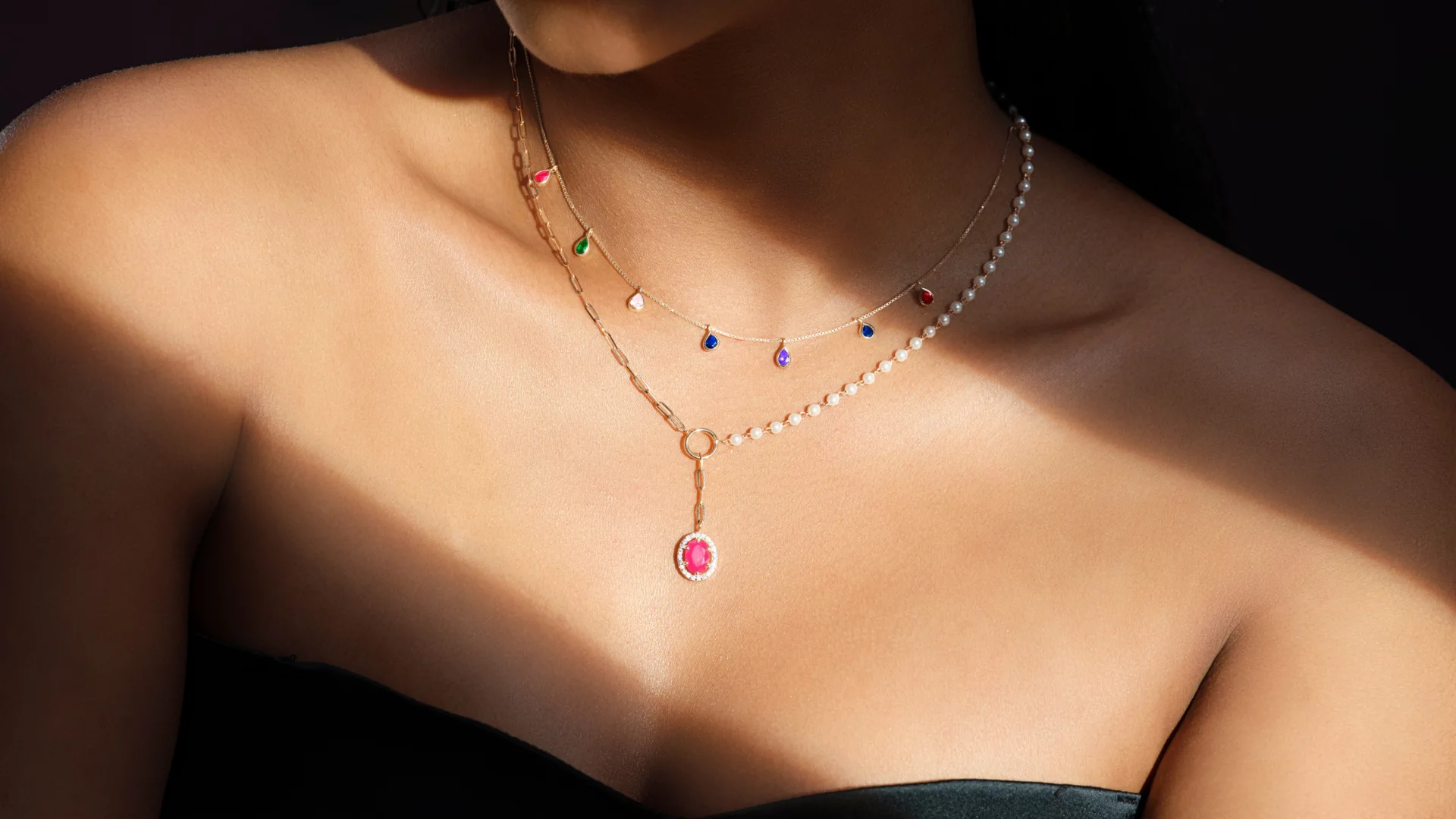
Rose Gold vs Yellow Gold: Your Daily Wear Style Guide
Two of the most beautiful gold tones in fine jewellery. One choice to make every morning. Here is how to tell which one actually works for your daily look, your skin tone, and your lifestyle.
Rose Gold vs Yellow Gold: Your Daily Wear Style Guide
There is a moment most jewellery lovers know well. You are getting ready, running slightly behind schedule, and you reach into your jewellery box without thinking. Your hand hovers between two pieces. One is rose gold. One is yellow gold. Both are beautiful. And somehow, choosing between them feels harder than it should.
This guide is for that moment. It will not tell you which one is objectively better, because neither is. What it will do is help you understand which one works better for your skin tone, your wardrobe, and the kind of day you are walking into.
What Actually Makes Rose Gold and Yellow Gold Different
Before getting into styling, it helps to understand what you are actually dealing with.
Pure gold, in its 24-karat form, is too soft to wear every day. So both rose gold and yellow gold are alloys — gold mixed with other metals to give them strength and shape.
The Composition Behind the Colour
Yellow gold gets its classic warm tone from a blend of pure gold, silver, and copper. The proportions stay fairly balanced, which is why the colour stays close to gold in its natural state. Rose gold, on the other hand, has a higher copper content. That extra copper is what gives it the distinctive pinkish-blush tone that sets it apart.
Why Rose Gold Has a Slightly Different Durability Profile
Because copper is a harder metal, rose gold tends to be slightly more scratch-resistant than yellow gold of the same karat. This does not mean yellow gold is fragile — far from it. But for pieces that take a lot of contact throughout the day, like rings or bangles, rose gold does hold up a little better on the surface.
What BIS 916 Means in the Context of Yellow Gold in India
When you are buying yellow gold jewellery in India, BIS 916 hallmarking is the standard you should always look for. It certifies that the gold is 91.6% pure, which is the benchmark for 22-karat gold. The HUID number that accompanies it makes the piece individually traceable. Every piece of gold at Arabian Gold and Diamonds carries this certification — and understanding what that means puts you in a much stronger position as a buyer.
Reading Your Skin Tone Before You Choose
This is where most people get stuck, and it is also where the decision gets a lot clearer.
Warm and Wheatish Undertones
If your skin has golden, peachy, or olive undertones, yellow gold was practically made for you. It picks up the warmth already in your complexion and amplifies it. The result is a glow that looks completely natural. Rose gold works here too, but yellow gold tends to feel more instinctive and more effortless on warm skin tones.
Deeper and Dusky Skin Tones
Yellow gold against deeper skin is genuinely striking. The contrast is rich and bold in the best way. Many styling guides lean towards rose gold as the universally safe choice, but for deeper skin tones, yellow gold can be the more powerful and memorable option, especially in traditional or occasion-wear contexts.
Neutral Undertones
If your skin tone sits somewhere in the middle, you have the most flexibility. Both rose gold and yellow gold will work. The choice then shifts entirely to your outfit and the mood of the occasion — which is actually the most freeing position to be in.
A Quick At-Home Test
Look at the veins on the inside of your wrist in natural light. If they appear blue or purple, your undertone is cool. If they look greenish, your undertone is warm. If you genuinely cannot tell, it is likely neutral. This is a simple way to anchor your decision before walking into a showroom.
Styling Yellow Gold for Everyday Wear
Yellow gold has been the foundation of Indian jewellery culture for centuries, and for good reason. It carries cultural weight, holds its value, and works across more contexts than people often give it credit for.
Yellow Gold with Traditional Ethnic Wear
This is where yellow gold is completely in its element. Against a kasavu saree, a silk salwar suit, or a handloom cotton set, yellow gold does not compete with the fabric. It completes it. The richness of the metal sits naturally alongside deep reds, forest greens, warm mustards, and every jewel tone in between.
Yellow Gold in a Modern Wardrobe
Yellow gold in everyday western or fusion wear is having a well-deserved moment. A slim yellow gold chain with a white shirt and tailored trousers reads clean and intentional. A pair of small gold hoops with a linen kurta works without looking like you tried too hard. The key is keeping the pieces simple when the outfit is simple.
The Everyday Pieces Worth Investing In
If you are building a daily wear collection around yellow gold, start with a good chain, a pair of small studs, and one bangle or bracelet that sits comfortably on the wrist. These three pieces will carry you through most days without needing to think about it.
Colours That Work Best with Yellow Gold
Yellow gold looks its richest against warm, earthy tones — think rust, olive, burgundy, ivory, and cream. It also works beautifully against black, which provides the contrast needed to let the gold come forward without any noise around it.
Styling Rose Gold for Everyday Wear
Rose gold sits in a particular sweet spot. It is warmer than silver, softer than yellow gold, and it carries a quiet kind of elegance that translates well across very different contexts.
Rose Gold with Pastels, Neutrals, and Fusion Outfits
This is where rose gold genuinely shines. Against blush pink, dusty lavender, soft sage, and off-white, the warm tone of rose gold creates a look that feels cohesive without being matchy. For fusion outfits — a structured blazer over a kurta, or a linen co-ord — rose gold adds warmth without weight.
Office and Daily Wear
Rose gold is one of the easiest metals to wear in a professional setting. It is sophisticated enough to look considered, but not so bold that it draws attention away from the rest of your appearance. A rose gold bracelet, a pair of small drop earrings, or a delicate pendant can move from a morning meeting to an evening dinner without any adjustment.
Rose Gold with Ethnic Wear
Rose gold works better with lighter ethnic wear than with heavily embroidered or richly coloured pieces. Against pastels, tissue fabrics, and modern kurtas, it reads beautifully. Against deep brocades or heavily worked silks, yellow gold tends to feel more natural.
Colours That Pair Well with Rose Gold
Rose gold works best with blush, ivory, nude, camel, soft grey, and dark navy. These colours let the warmth of the metal come through cleanly. Avoid pairing rose gold with very saturated or neon colours — the contrast tends to cancel out rather than complement.
Mixing Rose Gold and Yellow Gold — Does It Work?
Increasingly, yes. Mixed metal layering is one of the strongest jewellery trends of the moment, and rose gold and yellow gold actually sit very naturally together.
The Simple Rule for Mixing Metals
Keep one metal dominant and use the other as an accent. If your main piece is yellow gold, add a single rose gold element — a thin bracelet, a ring, or a stacked bangle. The eye reads it as intentional rather than accidental when one tone clearly leads.
Building a Daily Stack
For a daily wear stack that works across different outfits, try a yellow gold chain as your base layer, add a rose gold bracelet on the wrist, and keep earrings in one metal only. This gives enough contrast to look considered while staying light and wearable throughout the day.
Caring for Both — What Daily Wear Actually Does to Your Jewellery
Wearing jewellery every day is a joy. It also means your pieces need a little more attention than the ones you bring out only for occasions.
Cleaning Yellow Gold at Home
A mild soap dissolved in warm water and a soft cloth is all you need. Avoid anything abrasive. Dry the piece completely before storing it. Doing this once every two weeks is enough to keep yellow gold looking clean and bright.
How Rose Gold's Patina Develops Over Time
The copper in rose gold means it can develop a slightly richer, deeper tone over months of daily wear. Many people find this adds character to the piece. If you prefer to keep it closer to its original appearance, a gentle clean with mild soap every few weeks will slow the process.
When to Bring Pieces In for a Professional Clean
If your daily wear pieces have gemstone settings, clasps, or intricate work, bring them in for a professional check at least once a year. A jeweller can also polish away surface marks and make sure the structural integrity of the piece is still intact.
So — Rose Gold or Yellow Gold for Daily Wear?
Here is the short version.
Choose yellow gold if your skin tone runs warm, if you wear a lot of ethnic or traditional clothing, and if you want a piece that holds cultural and financial value over time. Yellow gold is not just a style choice — in the Indian context, it is a considered investment. Always look for BIS 916 hallmarked gold when you buy.
Choose rose gold if you lean towards fusion or modern outfits, if your wardrobe is built around pastels and neutrals, or if you want something that feels fresh and versatile in professional settings.
Or choose both. There is no rule that says you have to commit to one.
If you are ready to start or add to your daily wear collection, the team at Arabian Gold and Diamonds is happy to help you find pieces that actually work for your life. Visit us at our showrooms in Edapally, Kochi, or Pathanamthitta. A short conversation with one of our consultants can save you a great deal of second-guessing.