
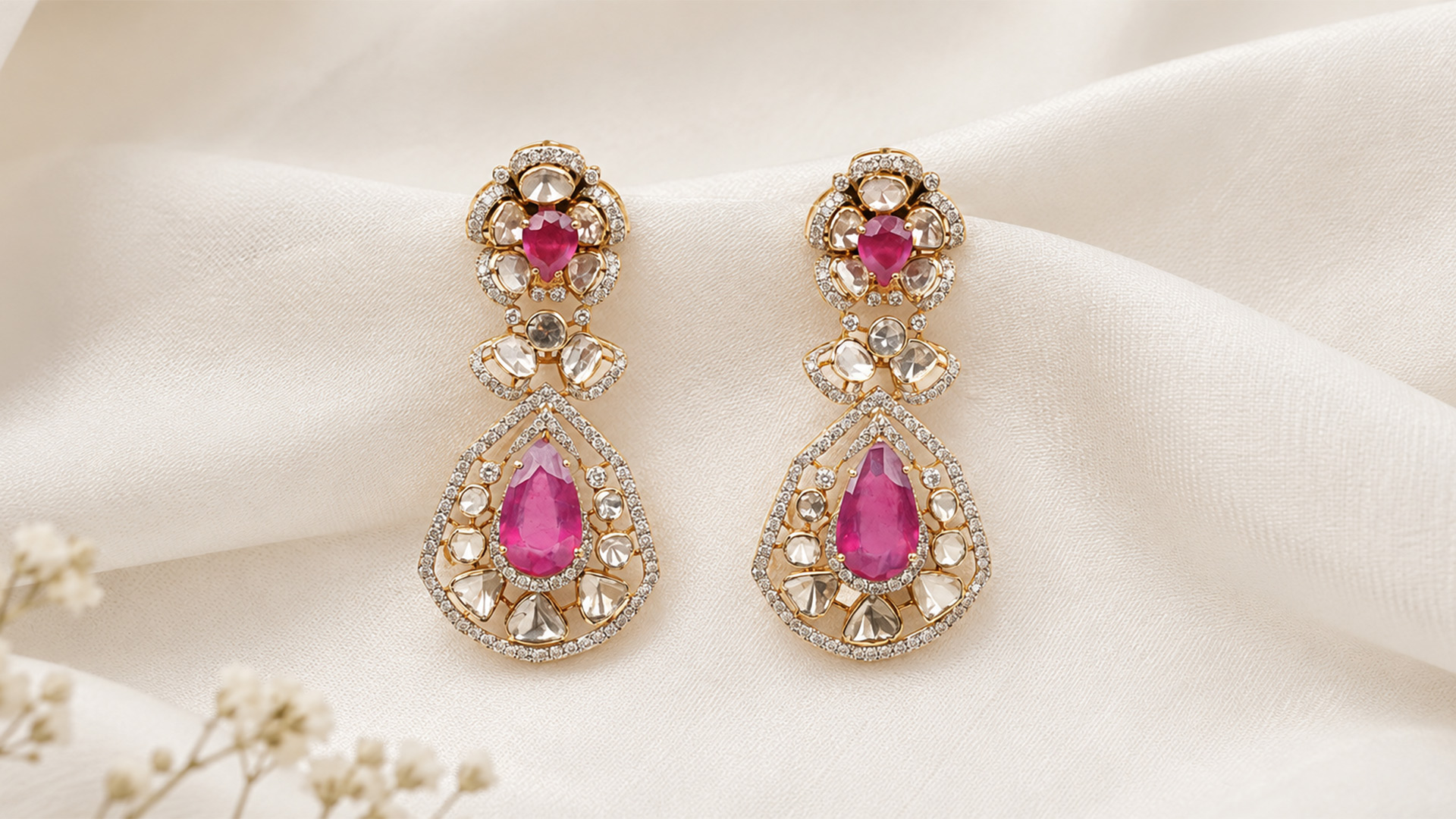
Polki Earrings: Styles, Designs and How to Choose the Right Pair
Polki earrings range from full statement jhumkas to delicate studs, and each style works differently depending on the necklace, occasion, and outfit. Here is how to choose the right pair.
Polki Earring Designs and How to Find the Right Pair for Your Look
In most bridal jewellery decisions, the necklace gets chosen first. The earrings come after, and are sometimes treated as though they simply need to match rather than complement. With polki jewellery, that approach can lead to a look that is slightly off, either too heavy on one end or unbalanced in a way that is hard to place.
Polki earrings sit at face level. They are what most people see first when they look at you, and what the camera picks up most clearly in photographs. Getting them right matters as much as the necklace, and in some cases more.
This guide covers the main polki earring styles, from full statement jhumkas to delicate studs, how each one works with different necklaces and occasions, and how to choose the right pair for your look. If you are starting from scratch on polki jewellery, our complete guide to polki jewellery is a good place to begin, and our guide to polki necklace sets covers how to build the necklace layer before adding earrings.
Why Polki Earrings Are More Than an Afterthought
The most common mistake when building a polki jewellery look is treating the earrings as an afterthought, something to be matched to the necklace after everything else is decided.
The issue with that approach is that the earring does not just match the necklace. It either balances it or it competes with it. A full, heavy jhumka paired with a three-layer polki necklace stack can tip the look into being too much. A small stud paired with a single long rani haar, on the other hand, can leave the face looking unanchored.
The earring is not secondary to the necklace. It is the piece that determines whether the necklace reads the way it should.
Polki Jhumkas: The Classic South Indian Earring Style
What Makes a Jhumka a Jhumka
The jhumka is defined by its form: a domed upper section, usually decorated with polki stones, that narrows into a bell-shaped drop below. The bell, or a series of small hanging bells, gives the jhumka its characteristic movement and sound when worn.
In polki jhumkas, the dome is typically set with polki stones using the kundan gold-foil technique, with the warm glow of the uncut diamonds across the dome surface creating the same soft, rich light that polki necklaces are known for. Some designs extend the polki setting down into the bell section as well, while others keep the bells in plain gold for contrast.
Full Jhumkas vs Mini Jhumkas
A full, statement polki jhumka is the natural choice for a main wedding ceremony, where the scale of the earring balances the weight of a full bridal necklace stack. These pieces are designed to be seen from a distance and to hold their visual presence across a long event.
A smaller, lighter mini jhumka serves a different purpose. For a reception, a mehendi, or any function where the bride wants a polki earring without the full weight of a statement piece, a mini jhumka keeps the design language consistent while scaling the scale back. Many brides find it practical to own one of each, using the full jhumka for the main ceremony and the mini jhumka across other events in the wedding calendar.
Jhumkas with Mattal
The mattal is a chain that connects the jhumka to a pin in the hair or to an ear cuff further up the ear, distributing the weight of a heavy jhumka and creating a layered visual line from the ear to the hairline.
Polki jhumkas with mattal are particularly common in classical dance jewellery and traditional ceremonial wear, but they are increasingly seen in bridal looks as well, especially for brides who want a full earring without the discomfort of a heavy single-point earring pulling on the earlobe across a long day. The mattal also adds a distinctive South Indian visual character that a freehanging jhumka alone does not have.
Polki Drop Earrings: The Versatile Alternative
Long Drops and Chandelier Styles
Polki drop earrings take a different approach to the jhumka: rather than the domed-and-bell form, they hang in a linear or layered drop from the ear, falling at various lengths depending on the design.
Longer chandelier-style polki drops work well with hairstyles that are pinned or swept up, where the length of the earring is fully visible and can make a clear statement. They also suit necklines that leave the neck and shoulder visible, where the vertical line of the earring draws the eye downward rather than outward.
Short and Mid-Length Drops
Short and mid-length polki drops, sitting at or just below the earlobe, are among the most versatile polki earring options available. They carry polki's characteristic warmth without the full weight or scale of a statement jhumka, which makes them practical for occasions that call for something considered but not ceremonial.
These designs also tend to work well for brides who want to wear their earrings beyond the wedding itself, for family events, festivals, or occasions where a full jhumka would feel like too much.
Polki Studs: The Everyday Option
Solitaire and Cluster Polki Studs
A polki stud is the simplest form of polki earring: a single large polki stone or a cluster of smaller polki stones set in gold, worn flat against the earlobe without any drop.
Polki studs are practical for everyday wear in a way that jhumkas and drops are not. They are lighter, less likely to catch on clothing or hair, and work as well with contemporary outfits as they do with traditional ones. A well-chosen polki stud with a good-quality stone and BIS 916 hallmarked gold setting can be a genuinely useful everyday piece that carries polki's warmth without the formality of a larger style.
When a Polki Stud Works Better Than a Jhumka
There are occasions where a stud simply works better: when the necklace is already making a strong enough statement and the earring should support rather than compete, when the event is informal enough that a full jhumka would feel overdressed, or when comfort across a long day is more important than visual scale.
A polki stud is not a compromise on a jhumka. For the occasions it suits, it is the better choice.
Kundan Polki Earrings: Understanding the Combination
Most polki earrings described as "kundan polki" are not a separate category of earring from polki earrings more broadly. Kundan refers to the setting technique used to hold the polki stones in place: a gold foil method where the foil is moulded around the irregular surface of the uncut stone to secure it.
In practice, the majority of polki earrings use the kundan setting, which is why the two terms appear together so frequently. When you see "kundan polki earrings," it simply means polki stones set using the kundan method, which is the standard way polki is held in fine jewellery. Our complete guide to polki jewellery covers the kundan technique and how it relates to polki stones in more detail.
How to Choose Polki Earrings to Match Your Look
Match the Earring to the Necklace Weight
The simplest rule for matching polki earrings to a polki necklace is to balance weight against weight. A heavy, multi-layer polki necklace stack calls for a simpler, lighter earring so the face is not overwhelmed on both sides. A single statement necklace, such as a long rani haar worn alone, has more room to support a fuller jhumka or drop.
Match the Earring to Your Hairstyle
Hair pinned up or tied back: the earring is fully visible and can carry more visual weight. Longer drops and full jhumkas with mattal read well in this setting.
Hair down, curled, or draped over the shoulder: the earring may be partially or fully obscured. In this case, a shorter stud or a mid-length drop that sits clear of the hair tends to work better than a long jhumka that disappears behind it.
Match the Earring to the Occasion
For a main wedding ceremony, a full polki jhumka or chandelier drop earring suits the formality and scale of the event. For a reception or secondary function, a mini jhumka or mid-length drop scales the look back without losing the polki character. For everyday wear or a festival occasion, a polki stud or a simple short drop is both practical and appropriate.
BIS 916 Hallmarking on the Gold Setting
Whatever polki earring style you choose, the gold used in the setting should carry BIS 916 hallmarking, certifying 91.6 percent gold purity with a HUID number that makes each piece individually traceable. At Arabian Gold and Diamonds, this applies across the TAHOR collection, including all polki earring designs.
Frequently Asked Questions About Polki Earrings
What are polki earrings?
Polki earrings are earrings made using natural uncut polki diamonds, typically set using the kundan gold-foil technique, and available in styles ranging from statement jhumkas and chandelier drops to delicate studs.
What is the difference between a polki jhumka and a polki drop earring?
A polki jhumka has a domed upper section set with polki stones and a bell-shaped drop below, giving it a rounded, layered form. A polki drop earring hangs in a more linear line from the ear, without the dome-and-bell structure of a jhumka. Both use polki stones but create different visual effects.
Can polki earrings be worn daily?
Lighter polki pieces such as studs and short drops can be worn regularly. Full jhumkas and chandelier styles are better suited to occasions given their scale and weight. With any polki earring, checking the setting periodically and avoiding prolonged exposure to moisture helps maintain the piece over time.
How do I choose polki earrings to match a polki necklace set?
Start with the weight of the necklace: a heavy layered stack calls for a lighter earring, while a single statement necklace can support a fuller jhumka or drop. Then consider your hairstyle and the occasion, and use those two factors to settle on the right scale and length.
What is a mattal and how does it work with polki jhumkas?
A mattal is a chain that connects the jhumka to a pin in the hair or an ear cuff higher up the ear, distributing the weight of the earring and creating a decorative line from the ear to the hairline. It is a traditional South Indian jewellery element that makes heavier jhumkas more comfortable to wear across long events, and adds a layered visual detail that a freehanging jhumka alone does not have.
Final Thoughts
Polki earrings are not secondary to the necklace in a polki look. The right pair frames the face, balances the necklace, and carries the warmth of polki's uncut diamond glow in a way that is visible from the moment someone looks at you.
Whether you are choosing a full jhumka for a wedding ceremony, a mini jhumka for a reception, or a polki stud for everyday wear, the decision comes down to three things: the weight of the necklace, the style of the occasion, and the hairstyle you are planning around.
If you would like to explore polki earring designs in person, our TAHOR collection is available at our showrooms in Edapally, Kochi and Pathanamthitta. You are also welcome to reach out on WhatsApp to arrange a consultation before your visit.